Quick answer: The Shia Azan has 18 lines (plus the recommended testimony of Wilayat): Allahu Akbar ×4, the testimony of Tawheed ×2, the testimony of Risalat ×2, Ashhadu anna Aliyan Waliyullah ×2, Hayya ’alas-salah ×2, Hayya ’alal-falah ×2, Hayya ’ala khayril ’amal ×2, Allahu Akbar ×2 and La ilaha illallah ×2. Children usually learn it in about two weeks by practising one section a day and then calling the azan before one family prayer daily.
Key takeaways
- “Hayya ’ala khayril ’amal” (Hasten to the best of deeds) is a distinctive line of the Shia Azan.
- Shia scholars explain that Ashhadu anna Aliyan Waliyullah is recited as a recommended testimony, not as an obligatory part of the azan.
- The Iqamah is shorter and adds “Qad qamatis-salah” (The prayer has begun).
The Shia Azan: words, count and meaning
| Line | Times | English meaning |
|---|---|---|
| Allahu Akbar | 4 | Allah is the Greatest |
| Ashhadu an la ilaha illallah | 2 | I bear witness there is no god but Allah |
| Ashhadu anna Muhammadan Rasulullah | 2 | I bear witness Muhammad is the Messenger of Allah |
| Ashhadu anna Aliyan Waliyullah | 2 | I bear witness Ali is the Wali of Allah (recommended) |
| Hayya ’alas-salah | 2 | Hasten to prayer |
| Hayya ’alal-falah | 2 | Hasten to success |
| Hayya ’ala khayril ’amal | 2 | Hasten to the best of deeds |
| Allahu Akbar | 2 | Allah is the Greatest |
| La ilaha illallah | 2 | There is no god but Allah |
Shia Azan meaning in Urdu
اللہ سب سے بڑا ہے۔ میں گواہی دیتا ہوں کہ اللہ کے سوا کوئی معبود نہیں۔ میں گواہی دیتا ہوں کہ محمد ﷺ اللہ کے رسول ہیں۔ میں گواہی دیتا ہوں کہ علی علیہ السلام اللہ کے ولی ہیں۔ نماز کی طرف آؤ۔ کامیابی کی طرف آؤ۔ بہترین عمل کی طرف آؤ۔ اللہ سب سے بڑا ہے۔ اللہ کے سوا کوئی معبود نہیں۔
For the Arabic text with full Urdu and English translation, see Shia Azan with Urdu and English translation.
The Shia Iqamah
| Line | Times |
|---|---|
| Allahu Akbar | 2 |
| Ashhadu an la ilaha illallah | 2 |
| Ashhadu anna Muhammadan Rasulullah | 2 |
| Ashhadu anna Aliyan Waliyullah (recommended) | 2 |
| Hayya ’alas-salah | 2 |
| Hayya ’alal-falah | 2 |
| Hayya ’ala khayril ’amal | 2 |
| Qad qamatis-salah | 2 |
| Allahu Akbar | 2 |
| La ilaha illallah | 1 |
A 2-week plan to teach the Azan to your child
- Days 1–2: Listen to a beautiful Shia Azan recording together at each prayer time.
- Days 3–4: Learn the four Allahu Akbar and the testimony of Tawheed.
- Days 5–6: Add the testimonies of Risalat and Wilayat. Link them to the Shia Kalma your child already knows.
- Days 7–9: Learn the three “Hayya” lines and their meanings.
- Days 10–11: Join everything and practise slowly.
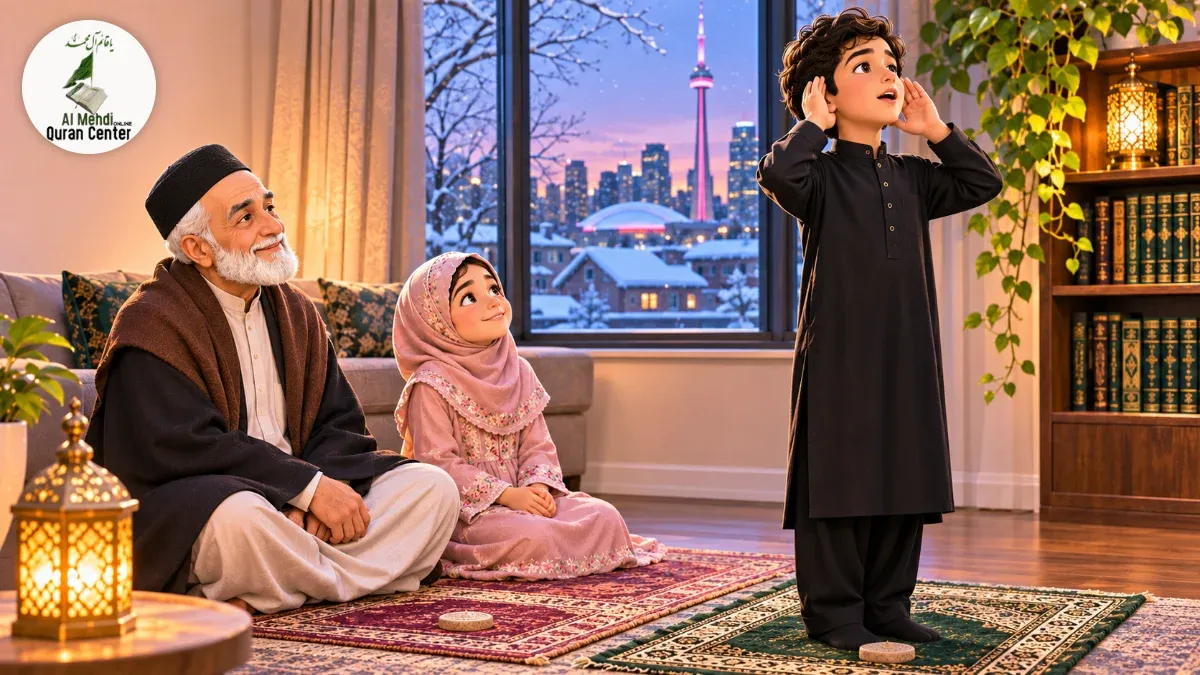
- Days 12–14: Let your child call the azan before Maghrib each day, then learn the Iqamah.
Tips for families in the UK, USA, Canada and Australia
- In the West, children rarely hear the azan outside. Calling it at home builds a strong Islamic identity.
- Praise effort, not only beauty of voice. A shy child can start by whispering.
- Record your child’s first azan and send it to grandparents.
- Move on to teaching Namaz-e-Jafaria once the azan is confident.
Want a teacher to guide pronunciation? Our Fiqah-e-Jafaria Namaz and Wajibaat course teaches Azan, Iqamah, wudhu and full Namaz-e-Jafaria, step by step. See also our Namaz-e-Jafaria online page.
Teach Azan and Namaz the Fiqh-e-Jafaria way. Live one-to-one classes for kids from age 5 with a qualified Shia teacher. 5 free trial classes. Book your free trial · WhatsApp +92 333 1941 225 · Contact us
Frequently Asked Questions
What is the difference between the Shia and Sunni Azan?
The Shia Azan includes “Hayya ’ala khayril ’amal” (Hasten to the best of deeds) and the recommended testimony “Ashhadu anna Aliyan Waliyullah”. It also does not include “As-salatu khayrun minan-nawm” in the Fajr azan.
How many lines are in the Shia Azan?
There are 18 lines in the core Shia Azan, plus 2 lines of the recommended testimony of Wilayat.
What does “Hayya ’ala khayril ’amal” mean?
It means “Hasten to the best of deeds”, referring to prayer.
Is “Aliyun Waliyullah” part of the Azan?
Shia scholars explain that it is recited as a recommended testimony of faith and not as an obligatory part of the Azan.
At what age can a child call the Azan?
Any child who can pronounce the words can call the Azan at home. Many children learn it between ages 6 and 9.