Bismillah ir-Rahman ir-Rahim
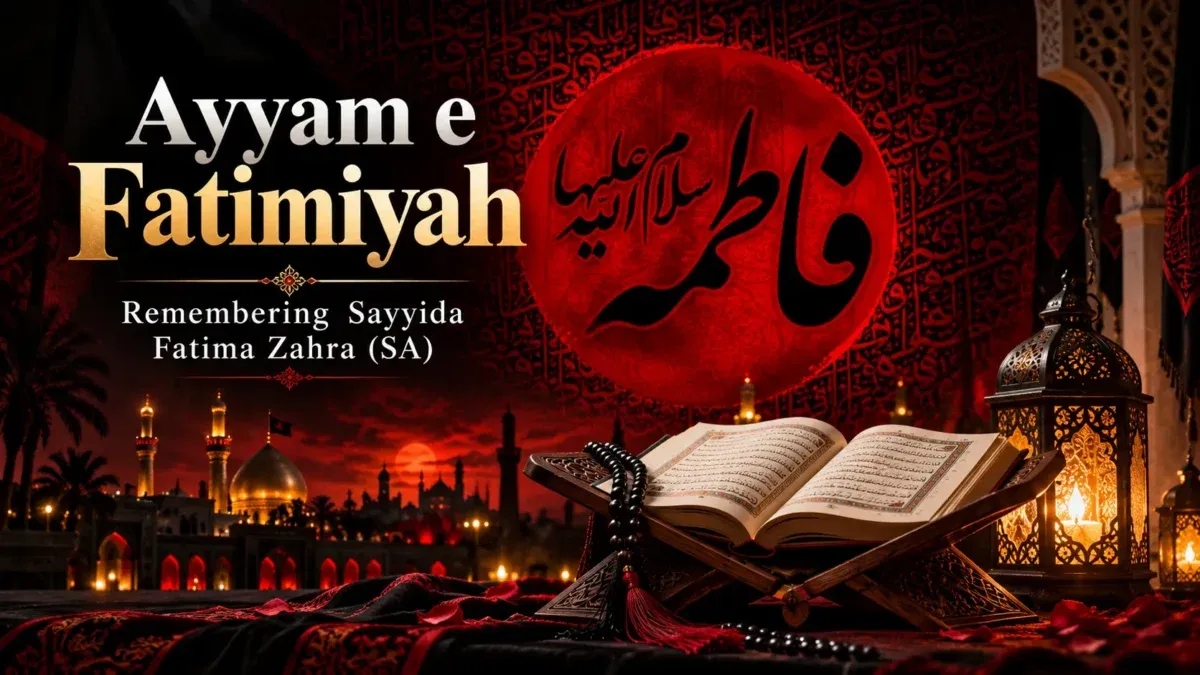
Ayyam e Fatimiyah are days of remembrance and mourning for Sayyida Fatima al-Zahra (SA), the beloved daughter of Prophet Muhammad (PBUH), the wife of Imam Ali (AS), and the mother of Imam Hasan (AS) and Imam Husayn (AS).
For Shia Muslims, these days are an opportunity to remember the life, patience, worship, knowledge, sacrifice, and steadfastness of Sayyida Fatima Zahra (SA). They are also a time to reflect on the teachings of the Ahlulbayt (AS) and strengthen our connection with the Quran and Islamic practice.
At Al Mehdi Online Quran Center, we encourage students and families to use these blessed days for Quran recitation, Islamic learning, remembrance, dua, and reflection.
What Is Ayyam e Fatimiyah?
Ayyam e Fatimiyah refers to the days observed by Shia Muslims in remembrance of the martyrdom of Sayyida Fatima Zahra (SA).
Historical narrations differ regarding the exact number of days between the passing of Prophet Muhammad (PBUH) and the martyrdom of Sayyida Fatima (SA). Two well-known narrations give periods of approximately 75 days and 95 days. Because of this difference, Shia communities observe two periods of Fatimiyah remembrance.
The first Fatimiyah is associated with 13 Jumada al-Awwal, while the second is associated with 3 Jumada al-Thani. The exact Gregorian dates change each year with the Islamic lunar calendar and may differ according to local moon sighting.
The purpose of these days is not simply to remember a historical date. They provide an opportunity to reflect upon the life and teachings of Sayyida Fatima Zahra (SA).
Why Is Sayyida Fatima Zahra (SA) Important in Shia Islam?
Sayyida Fatima Zahra (SA) holds a central place in the spiritual history of Islam.
She was the daughter of the Holy Prophet Muhammad (PBUH), the wife of Imam Ali ibn Abi Talib (AS), and the mother of Imam Hasan (AS), Imam Husayn (AS), Sayyida Zaynab (SA), and Umm Kulthum (SA).
Her life represents devotion to Allah, knowledge, patience, modesty, family responsibility, worship, and courage.
For Shia Muslims, remembering Sayyida Fatima Zahra (SA) is also closely connected with remembering the Ahlulbayt (AS) and learning from their teachings.
Lessons From the Life of Sayyida Fatima Zahra (SA)
Ayyam e Fatimiyah can become a meaningful period of personal reflection.
1. Connection With the Quran
Sayyida Fatima Zahra (SA) lived in a household deeply connected with revelation and the Quran.
For Muslim families, one meaningful way to remember her is to spend more time reading and understanding the Holy Quran.
Parents can encourage children to recite a few verses each day and learn their meanings.
Students who want to improve their Quran recitation can also study Quran Reading with Tajweed through structured online lessons.
2. Importance of Worship
The life of Sayyida Fatima Zahra (SA) reminds believers about the importance of worship and devotion to Allah.
Ayyam e Fatimiyah can be a time to improve daily prayers, Quran recitation, dua, and other acts of worship.
For students who want to understand Shia prayer and Islamic obligations, studying [Fiqah e Jafria Namaz, Ahkaam and Wajibaats] can provide structured guidance according to the Shia school of jurisprudence.
3. Patience During Difficulties
The life of Sayyida Fatima Zahra (SA) is remembered for patience in difficult circumstances.
Her example teaches families to remain connected with Allah during hardship and to respond to challenges with faith, patience, and dignity.
4. Family and Islamic Values
Sayyida Fatima Zahra (SA) was a daughter, wife, mother, and teacher.
Her household is an important source of lessons about family life, Islamic character, responsibility, and devotion.
Parents can use Ayyam e Fatimiyah as an opportunity to teach children about the Ahlulbayt (AS) in an age-appropriate way.
5. Standing for Truth
The remembrance of Sayyida Fatima Zahra (SA) also encourages believers to value truth, justice, and responsibility.
Learning about the Ahlulbayt (AS) should not remain limited to historical information. Their teachings can guide Muslims toward better character and stronger faith.
How Can We Observe Ayyam e Fatimiyah?
Different Shia families and communities observe Ayyam e Fatimiyah in different ways.
Some common practices include:
- Attending a Majlis
- Listening to lectures about Sayyida Fatima Zahra (SA)
- Reciting Quran
- Sending Salawat
- Making dua
- Giving charity
- Feeding others
- Remembering the Ahlulbayt (AS)
- Teaching children about the life of Sayyida Fatima (SA)
- Improving daily prayers
- Studying Islamic teachings
- Reflecting on personal character and responsibilities
The most important goal is sincere remembrance and learning.
Ayyam e Fatimiyah and Quran Learning
The Quran and the teachings of the Ahlulbayt (AS) are central to Shia Islamic education.
Families can make Ayyam e Fatimiyah an opportunity to establish a stronger Quran routine.
For beginners, Basic Qaida Reading with Tajweed can help build the foundation needed for correct Quran pronunciation.
For students who already read the Quran, Quran Reading with Tajweed can help develop more accurate recitation and understanding of Tajweed rules.
Al Mehdi Online Quran Center provides structured online Quran education for children and adults, including Quran reading, Tajweed, Basic Qaida, and Fiqah-e-Jafria studies.
Teaching Children About Sayyida Fatima Zahra (SA)
Children can learn about Ayyam e Fatimiyah through simple stories, Quran recitation, duas, and discussions about good character.
Parents can ask children questions such as:
- Who was Sayyida Fatima Zahra (SA)?
- Who were her parents?
- Who was her husband?
- Who were her children?
- What can we learn from her character?
- Why do Shia Muslims remember her martyrdom?
- How can we improve our relationship with the Quran?
Children do not need complicated historical discussions at the beginning.
Simple lessons about faith, kindness, patience, prayer, modesty, family, generosity, and love for the Ahlulbayt (AS) can help them understand the importance of her life.
Families looking for structured Quran education can explore the online Quran courses at Al Mehdi Quran Center.
Ayyam e Fatimiyah in the Modern World
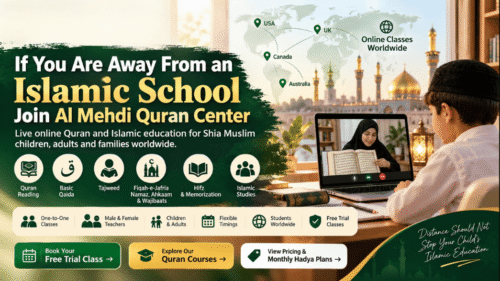
Many Shia families now live far from Shia Islamic centers.
Families in the UK, USA, Canada, Australia, and other countries may not always have easy access to local Shia Quran teachers or Islamic classes.
Online education can help families maintain a regular connection with Quran learning from home.
Al Mehdi Online Quran Center provides online Quran and Fiqah-e-Jafria education through structured classes with Shia teachers.
The center offers learning options for children and adults, including Quran reading, Tajweed, Basic Qaida, and Fiqah-e-Jafria studies.
Free Shia Islamic Learning Resources
Learning does not always have to begin with a paid course.
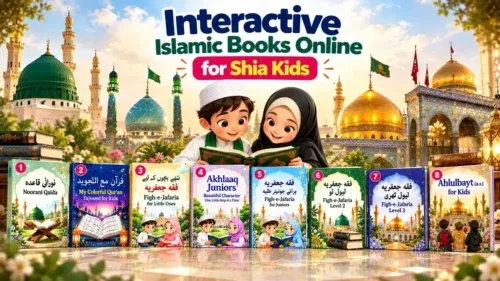
Al Mehdi Online Quran Center also provides free Shia Islamic PDF resources, including Noorani Qaida, Quran resources with Tajweed, Namaz-e-Jafria material, Quran translations, and other educational resources.
These resources can be useful for families who want to practice at home.
Parents can combine home practice with structured lessons from a qualified teacher.
Frequently Asked Questions About Ayyam e Fatimiyah
What is Ayyam e Fatimiyah?
Ayyam e Fatimiyah is a period of remembrance and mourning observed by Shia Muslims in connection with the martyrdom of Sayyida Fatima Zahra (SA).
When is Ayyam e Fatimiyah?
There are different historical narrations regarding the date of Sayyida Fatima Zahra’s (SA) martyrdom. The two commonly observed dates are associated with 13 Jumada al-Awwal and 3 Jumada al-Thani.
Because the Islamic calendar is lunar, the Gregorian date changes every year.
Why are there two Fatimiyah periods?
The two periods are connected with different historical narrations concerning the number of days between the passing of Prophet Muhammad (PBUH) and the martyrdom of Sayyida Fatima Zahra (SA).
How can children observe Ayyam e Fatimiyah?
Children can learn about the life of Sayyida Fatima Zahra (SA), recite Quran, learn duas, attend suitable Majalis with their families, and practice good Islamic manners.
What can Muslims learn from Sayyida Fatima Zahra (SA)?
Her life is remembered for devotion to Allah, worship, patience, knowledge, family values, generosity, courage, and commitment to truth.
Can I learn Quran online according to the Shia tradition?
Yes. Al Mehdi Online Quran Center provides online Quran and Fiqah-e-Jafria education for children and adults through structured lessons with Shia teachers.
Remembering Sayyida Fatima Zahra (SA)
Ayyam e Fatimiyah gives us an opportunity to pause and remember the daughter of the Holy Prophet Muhammad (PBUH).
It is a time to remember her sacrifice, reflect on her character, strengthen our relationship with the Quran, and learn more about the teachings of the Ahlulbayt (AS).
May Allah help us follow the path of the Prophet Muhammad (PBUH) and his Ahlulbayt (AS), increase our love for the Quran, and grant us the ability to live according to Islamic teachings.
Ya Zahra (SA).
Allahumma salli ala Muhammadin wa Aali Muhammad.
Start Learning Quran With Al Mehdi Online Quran Center
If you or your child wants to improve Quran reading, Tajweed, or learn Fiqah-e-Jafria, explore the available courses at Al Mehdi Online Quran Center.
5 free trial classes can help families understand the teaching approach before enrollment.