Chehlum of Imam Hussain (AS): Meaning, Significance & How It Was Observed in 2025
Forty days after the tragedy of Karbala, Shia Muslims around the world mark Chehlum – one of the most emotionally significant days in the Islamic calendar. It is a day of remembrance, reflection, and renewed commitment to the values Imam Hussain (AS) stood for. This article explains what Chehlum is, why it matters, and how communities in the UK, USA, Canada, and Australia observed it in 2025.
What Does Chehlum Mean?
The word “Chehlum” comes from the Persian word chehel, meaning forty. Its Arabic equivalent, Arbaeen, carries the same meaning. Chehlum falls on the 20th of Safar in the Islamic calendar, exactly forty days after Ashura – the 10th of Muharram, when Imam Hussain (AS), the grandson of Prophet Muhammad (PBUH), was martyred in the Battle of Karbala in 61 AH (680 CE).
While Ashura marks the day of the tragedy itself, Chehlum marks the formal conclusion of the forty-day mourning period, and carries its own distinct significance tied to remembrance, return, and resolve.
The Historical Background of Chehlum
After the tragedy at Karbala, the surviving members of Imam Hussain’s family – including his sister, Sayyida Zainab (SA), and his son, Imam Zain-ul-Abideen (AS) – were taken captive and marched through Kufa and Sham before eventually being permitted to return home. According to widely held tradition among Shia Muslims, it was on the 20th of Safar that the family returned to Karbala to visit the graves of the martyrs, grieve properly for the first time, and pay their respects at the site of the tragedy.
This “Return to Karbala” is central to why the 40th day carries such weight – it represents the moment mourning could finally be expressed openly, after weeks of captivity and forced silence.
Why the 40th Day Specifically?
The number forty holds broader significance across Islamic tradition and many cultures more generally, often associated with periods of transition, testing, or spiritual completion. In the context of mourning, many scholars note that forty days is often regarded as the point at which grief is more fully processed, and remembrance shifts from raw mourning toward reflection and meaning-making. Chehlum, then, is not simply a date on the calendar – it is framed as the moment when Imam Hussain’s message of standing against oppression and injustice is renewed and carried forward by each generation.
How Chehlum Is Observed
Observance of Chehlum varies by community and region, but several elements are common across the Shia world:
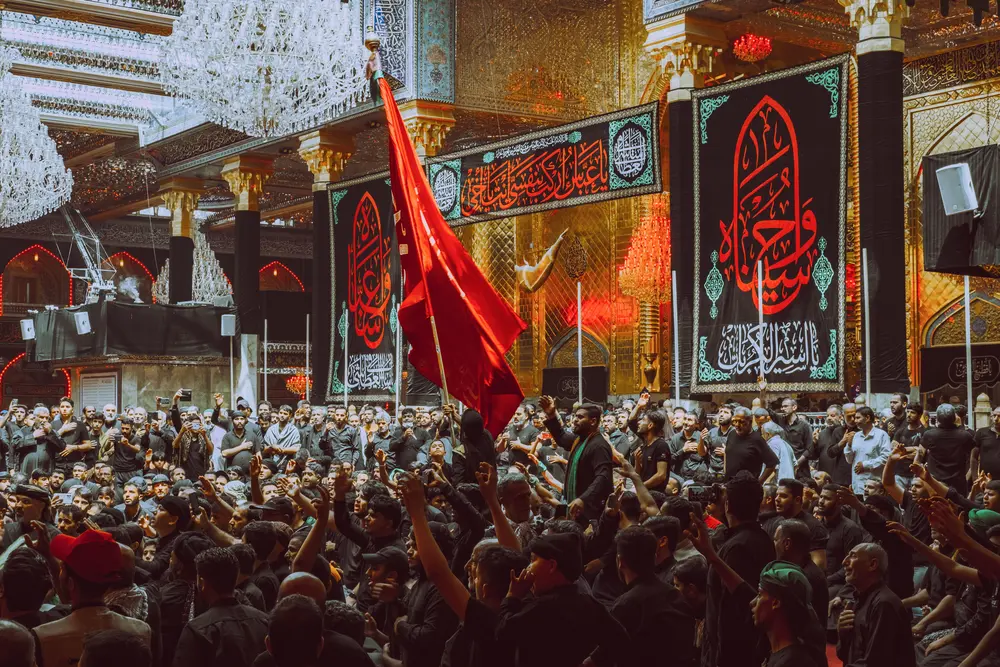
- Majalis (mourning gatherings): Scholars narrate the events of Karbala and draw out their moral and spiritual lessons for the audience.
- Matam and Noha: Symbolic expressions of grief, including chest-beating (matam) and the recitation of elegiac poetry (noha and marsiya), performed in remembrance of the martyrs.
- Ziyarat of Arbaeen: A specific supplication recited on this day, understood to reaffirm the values of loyalty and sacrifice associated with Imam Hussain (AS).
- Processions (Juloos): Public marches, often carrying an Alam (ceremonial banner) and Zuljinah (a symbolic riderless horse), held in cities with significant Shia populations.
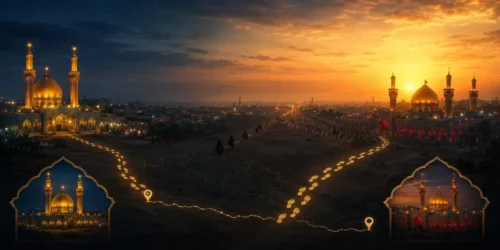
- The Arbaeen Walk in Iraq: Every year, millions of pilgrims walk from Najaf to Karbala – a journey of roughly 80 kilometers – in what has become one of the largest annual peaceful gatherings in the world, supported along the way by thousands of free service stations (mawakib) offering food, rest, and medical care to walkers.
Chehlum 2025: A Global Recap
In 2025, Chehlum fell around the 14th-15th of August (20 Safar 1447 AH), with the exact date varying slightly by country depending on local moon sighting. Communities across the UK, USA, Canada, and Australia held processions and gatherings that reflected both the scale and the growing visibility of Chehlum commemorations in the West.
United Kingdom
London hosted its 45th annual Arbaeen procession on Sunday, 17th August 2025, assembling at Marble Arch. Organised by the Hussaini Islamic Trust UK, which has run the event since 1982, it is widely regarded as the oldest and largest Arbaeen procession in Europe. Alongside London, cities such as Bradford also held their own Chehlum processions and gatherings, with local Islamic centres organising Arbaeen walks and majalis for their communities.
United States
The city of Dearborn, Michigan – home to one of the largest Shia communities in the country – held its annual Arbaeen procession, known locally as the Maseerah, on 16th August 2025. What began more than two decades ago as a small gathering organised by Imam Husham Al-Husseini, founder of the Karbala Islamic Center, drew an estimated 40,000 participants in 2025, making it the largest Arbaeen commemoration in US history. Marchers walked from the Karbala Islamic Center to Ford Woods Park, with the City of Dearborn providing road closures, medical support, and security for the event, and attendees travelling in from across the United States and Canada to take part.
Canada
Toronto’s Shia community held its annual Arbaeen Juloos in 2025, with marchers walking from Milliken Park to the Hussainiyah Imambargah on Passmore Avenue. Local Islamic centres, including the Islamic Shia Ithna-Asheri Jamaat of Toronto, also held dedicated Chehlum programs featuring Majlis, Ziyarat of Arbaeen, Noha, and community Niyaz (food offerings) in the days surrounding the commemoration.
Australia
Melbourne marked its 17th annual Arbaeen procession on Saturday, 16th August 2025, organised by the local Shia community and Islamic cultural centres. As in previous years, the event combined a public procession with community majalis, drawing attendees from across Victoria to commemorate the 40th day after Ashura together.
The Broader Message of Chehlum
Across every country where it is observed, Chehlum carries a message that goes beyond ritual mourning. It is remembered as a stand for truth, justice, and moral courage in the face of oppression – values considered relevant well beyond any single time or place. This is part of why processions like those in London, Dearborn, Toronto, and Melbourne continue to grow year after year, drawing not only Shia Muslims but often wider interest from neighbouring communities as well.
Teaching the Story of Karbala to the Next Generation
For many Shia families, Chehlum is also a moment to make sure children understand the history and meaning behind the mourning – not just the rituals, but the reasoning behind them. This is often woven into structured Islamic education alongside Quran and Tajweed learning. At Al Mehdi Online Quran Center, the story of Karbala and its lessons are taught as part of a broader Fiqah e Jafria curriculum, alongside core Quran and Tajweed courses, so children grow up understanding both how to recite the Quran and why days like Ashura and Chehlum matter.
If you’d like your child – or yourself – to learn more about Fiqah e Jafria alongside Quran studies, you can explore the full range of classes on the Shia Online Quran Center page, or book a free trial class to get started.
Frequently Asked Questions
What is the difference between Ashura and Chehlum? Ashura, on the 10th of Muharram, marks the day Imam Hussain (AS) and his companions were martyred at Karbala. Chehlum, forty days later on the 20th of Safar, marks the conclusion of the mourning period and is associated with the family’s return to Karbala to grieve openly.
Is Chehlum only observed in Iraq? No. While the Arbaeen walk in Iraq is the largest single gathering, Chehlum is observed by Shia communities worldwide, including large public processions in the UK, USA, Canada, Australia, and many other countries.
Do only Shia Muslims observe Chehlum? Chehlum is primarily a Shia observance, though the story of Karbala and Imam Hussain’s stand against oppression is respected more broadly, and some of these processions draw interest and attendance from people outside the Shia community as well.
Why do processions carry an Alam and Zuljinah? The Alam (banner) and Zuljinah (a symbolically adorned, riderless horse) represent elements of the events at Karbala, and their presence in processions is a traditional way of visually retelling that history to those in attendance.
How can I teach my children about the significance of Chehlum? Structured Islamic studies that combine Quran learning with Fiqah e Jafria education are one of the most effective ways to help children understand not just the mourning rituals, but the historical and moral context behind them.
To learn more about how Quran studies and Fiqah e Jafria education are taught together, visit the courses page or sign up for a class suited to your family’s needs.