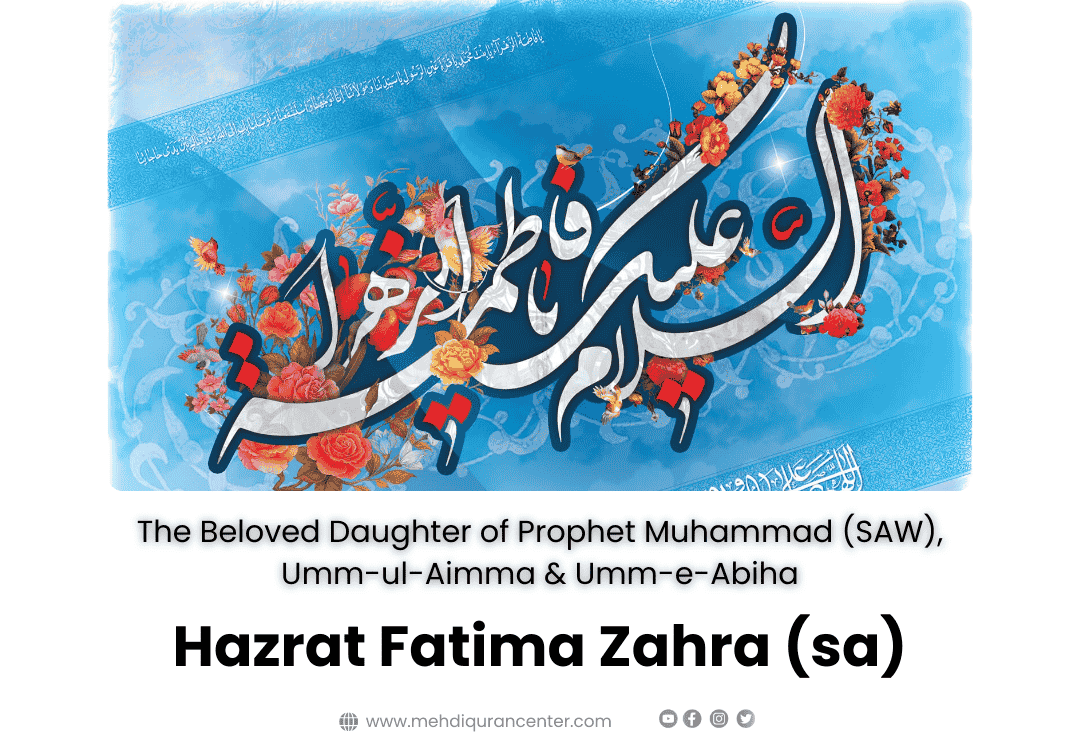
The Beloved Daughter of Prophet Muhammad (SAW), Umm-ul-Aimma & Umm-e-Abiha
The 20th of Jamadi al-Thani marks one of the most radiant days in Islamic history—the birth anniversary of Sayyidat-un-Nisa al-Alamin, the Leader of the Women of the Worlds, Hazrat Fatima Zahra (سلام الله علیها). Her birth in Medina was not only a moment of joy for the family of Prophet Muhammad (Peace be upon him & his Holy Family) but also a divine blessing for the entire Muslim Ummah.
Known by her exalted titles Umm-ul-Aimma (Mother of the Imams) and Umm-e-Abiha (Mother of Her Father), Fatima Zahra (sa) holds a unique spiritual rank, unmatched moral purity, and exemplary virtues that continue to inspire humanity centuries later.
This comprehensive tribute explores her birth, life, virtues, influence, and everlasting legacy.
Recite Ziyarat of Sayyida Fatima Zahra (S.A)
Key Details of the Birth of Hazrat Fatima Zahra (sa)
| Subject | Details |
|---|---|
| Name | Fatima Zahra (sa) |
| Father | Prophet Muhammad (SAW) |
| Mother | Lady Khadija al-Kubra (sa) |
| Birth Date (Islamic) | 20th Jamadi al-Thani |
| Birthplace | Medina (according to many historical sources) |
| Titles | Umm-ul-Aimma, Umm-e-Abiha, Sayyidat-un-Nisa al-Alamin, Zahra, Batool |
| Meaning of “Fatima” | “The one who protects from evil,” or “the one weaned from ignorance and impurity” |
| Significance | Mother of eleven Imams from the House of the Prophet; epitome of purity, piety, and devotion |
1. Introduction: A Light Born from the Light of Prophethood
In Islamic tradition, the birth of Hazrat Fatima Zahra (sa) is viewed as a divine event, surrounded by spiritual blessings and heavenly grace. Numerous narrations describe her as created from a heavenly light, symbolizing her purity and elevated status.
Prophet Muhammad (SAW) said:
“Fatima is a part of me. Whoever pleases her pleases me, and whoever angers her angers me.”
This single statement is enough to illustrate her profound spiritual and emotional closeness to the Prophet (SAW). Scholars affirm that no other daughter of any prophet has been given such divine esteem.
2. The Context of Her Birth in Medina
Although some early biographical works mention Mecca, many respected sources affirm that 20 Jamadi al-Thani in Medina is widely recognized for her birth celebration. Her arrival blessed the household during a time of rising revelation, community building, and spiritual transformation.
Lady Khadija (sa), her noble mother, had already demonstrated unparalleled sacrifice for Islam. Thus, the birth of Fatima (sa) brought great joy, symbolizing the continuation of the Prophet’s lineage and mission.
3. Her Titles and Their Profound Meaning
Hazrat Fatima Zahra (sa) is known by numerous titles, each highlighting an aspect of her spiritual rank and personality.
3.1 Umm-ul-Aimma (Mother of the Imams)
A title honoring that she is the mother of eleven Imams from the blessed household—leaders of knowledge, spirituality, and justice.
3.2 Umm-e-Abiha (Mother of Her Father)
A beautiful expression of her deep affection and loyalty toward the Prophet (SAW). Her care, compassion, and emotional support were so profound that she was described as the “mother” of her father.
3.3 Az-Zahra (The Radiant One)
Her face and presence emitted spiritual radiance. Narrations say her forehead glowed with divine light.
3.4 Al-Batool
She was unmatched in purity, chastity, and spirituality.
Each title reflects layers of her spiritual depth and the remarkable influence she had within Islam.
4. Early Life and Upbringing Under the Shade of Prophethood
Fatima Zahra (sa) was raised in the most spiritually enriched household in human history: the home of Prophet Muhammad (SAW) and Lady Khadija (sa). Her childhood was unlike any other, immersed in divine revelation, prophetic teachings, and spiritual discipline.
4.1 Witnessing the Early Struggles of Islam
From persecution in Mecca to migration and community-building in Medina, she experienced firsthand the trials faced by the Muslims. These experiences strengthened her resolve and nurtured her qualities of patience and leadership.
4.2 Defender of Her Father
She stood firmly beside her father during times of extreme hardship, including the boycott of Banu Hashim and public opposition to Islam. Hence, the Prophet lovingly called her Umm-e-Abiha.
5. Marriage to Imam Ali (AS): A Union of Light
The marriage between Fatima Zahra (sa) and Imam Ali (as) is celebrated as an ideal Islamic union. It was not based on wealth or social status but on piety, knowledge, and divine selection.
Key Characteristics of Their Marriage
- Simplicity and humility
- Mutual respect
- Deep spiritual harmony
- Shared commitment to serving Islam
Their home became a school of wisdom, nurturing future Imams and setting the standard for Muslim families.
6. Her Children: Leaders of Humanity
Hazrat Fatima (sa) was blessed with children who became central figures in Islamic history.
Her Children Include:
- Imam Hasan (as) – Leader of patience and peace
- Imam Husayn (as) – Martyr of Karbala and savior of Islam
- Lady Zainab (sa) – The voice of Karbala and symbol of resilience
- Umm Kulthum (sa) – Example of courage and dignity
- Muhsin (as) – The unborn martyr
Through them, she became Umm-ul-Aimma, the mother of the Imams, linking all spiritual leadership to her blessed lineage.
7. Her Character and Virtues
Hazrat Fatima Zahra (sa) embodied the highest ethical and spiritual virtues.
7.1 Purity
Allah Himself declared her purity in Ayat al-Tathir (Quran 33:33), affirming her status among the Ahlul Bayt.
7.2 Worship
She spent long nights in prayer, remembered for her humility and devotion.
7.3 Generosity
She gave away her food, clothing, and wealth—often choosing hunger over eating when others were in need.
7.4 Modesty
Her modesty became a model for Muslim women, balancing dignity with empowerment.
7.5 Knowledge and Wisdom
Her sermon in the mosque of Medina remains one of the most profound speeches on Islamic law, rights, and justice.
8. Fatima Zahra (sa) in the Eyes of the Prophet (SAW)
No father has praised his daughter the way Prophet Muhammad (SAW) praised Fatima (sa).
He said:
“Fatima is my heart and my soul.”
“Fatima is the leader of the women of Paradise.”
“Allah becomes pleased when Fatima is pleased.”
Such statements reflect her divinely chosen status and her essential role in continuing the mission of Islam.
9. Her Role as a Pillar of Islam
Hazrat Fatima Zahra (sa) was not only a daughter and mother; she was a scholar, spiritual leader, activist, and defender of truth.
9.1 Social Role
She assisted the poor, supported refugees, and strengthened the Muslim community.
9.2 Political Awareness
She fearlessly addressed injustice and stood firm in defense of her rights and the rights of her family.
9.3 Spiritual Leadership
Women and men alike sought her wisdom. Her presence elevated the moral standard of the Ummah.
10. The Legacy of Her Birth Anniversary
The 20th of Jamadi al-Thani is celebrated worldwide by Muslims who admire her teachings, mourn her struggles, and rejoice in her virtues. Her birthday is not just a historical date; it is a spiritual reminder of:
- Purity
- Strength
- Humility
- Faith
- Justice
Communities commemorate her birth by organizing sermons, charity events, educational programs, and gatherings that inspire faith and unity.
11. Why Her Birth Remains Relevant Today
Hazrat Fatima Zahra (sa) provides timeless guidance for every generation.
11.1 For Women
She is the perfect example of dignity, strength, and spiritual leadership.
11.2 For Men
Her respect for her father and husband exemplifies honor and loyalty.
11.3 For Families
Her household demonstrates the foundation of a peaceful and moral Islamic home.
11.4 For Society
Her teachings on justice, charity, and humanity remain essential for modern times.
12. Lessons from Her Life for the Modern World
12.1 Strength Through Faith
Her endurance in hardship teaches resilience.
12.2 Commitment to Truth
She never compromised her principles, even under immense pressure.
12.3 Charity and Selflessness
Her giving nature is a model for building compassionate communities.
12.4 Leadership with Humility
Despite her status, she lived simply and served others.
13. The Universal Love for Fatima Zahra (sa)
Muslims from all sects—Sunni, Shia, Sufi—unite in reverence for her. Her spiritual influence transcends boundaries, making her a symbol of universal love, mercy, and inspiration.
14. A Prayer in Her Honor
O Allah, by the right of Fatima Zahra (sa), grant us purity, wisdom, patience, and guidance.
Make our homes peaceful, our hearts sincere, and our paths firm upon truth.
Ameen.
The birth of Hazrat Fatima Zahra (sa) on 20 Jamadi al-Thani is a celebration of divine light entering the world. As the beloved daughter of Prophet Muhammad (SAW), the mother of the Imams, and a role model for all humanity, her life continues to illuminate the hearts of believers.
Her values—purity, justice, faith, compassion, and resilience—remain essential for anyone seeking a meaningful and God-conscious life.
May her legacy inspire us to walk with humility, speak with truth, and live with purpose.